
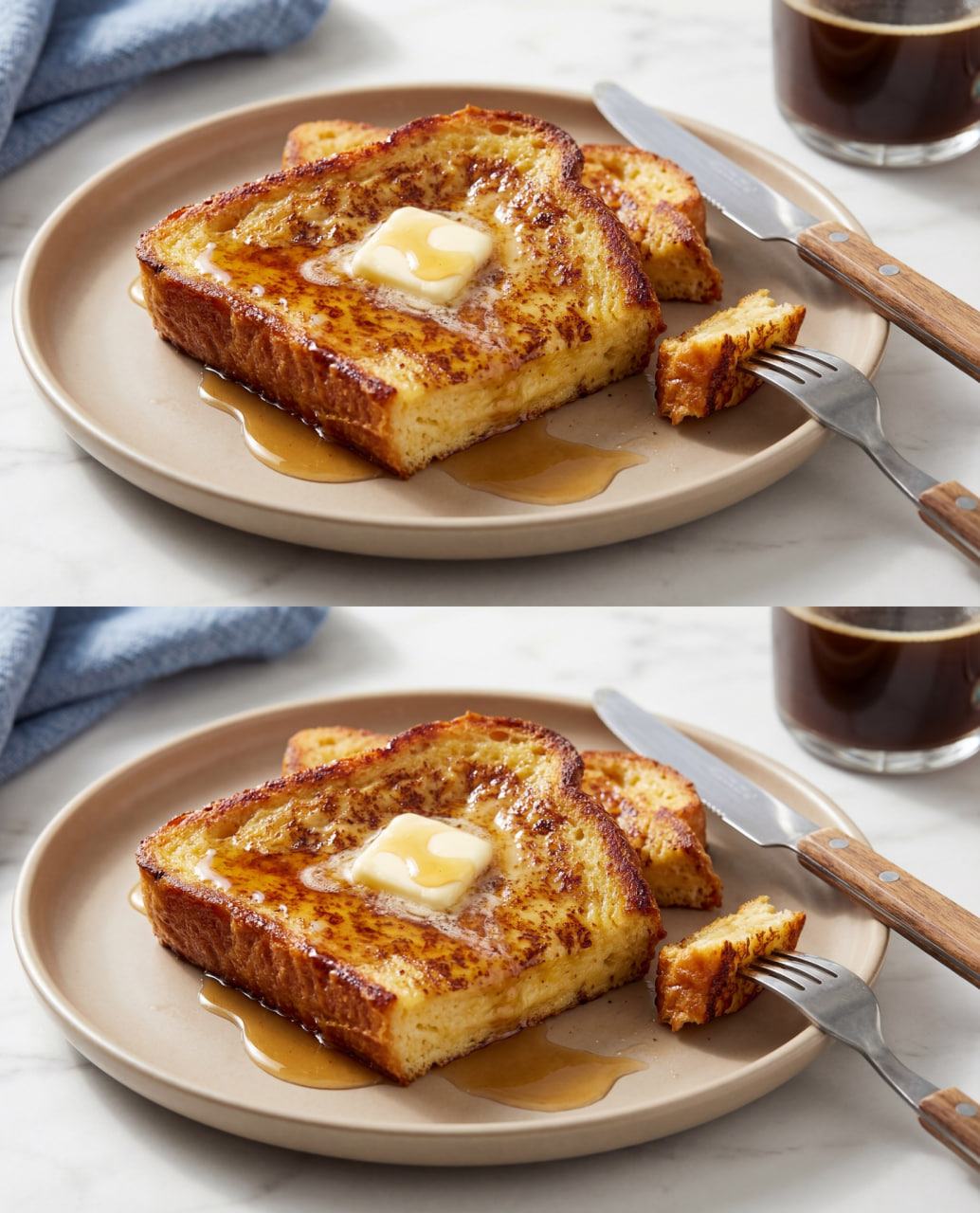
There’s a reason French toast transcends breakfast: it’s pure alchemy. Stale bread reborn as golden, caramelized perfection—crisp at the edges, impossibly tender within, infused with the warmth of vanilla and spice. But too often, it lands soggy, rubbery, or bland.
Not here.
This is the definitive method, refined by Food Network Kitchen–style best practices: every step calibrated for deep browning, custard integrity, and soul-deep satisfaction. Whether you’re feeding two or twelve, this is how you make French toast that doesn’t just please—it impresses.
 Step 1: Choose & Prep the Bread
The Foundation of Greatness
Why it matters: Bread is 80% of the battle. The right loaf soaks without collapsing; the wrong one turns to mush.
 Best Choices
-
Brioche or challah (enriched with butter and eggs → rich, custardy crumb)
-
Country-style sourdough (tangy depth with sturdy structure)
-
Texas toast (thick-sliced, forgiving, ideal for beginners)
 Avoid
Avoid
-
Pre-sliced sandwich bread (too thin, tears easily)
-
Very fresh bread (retains moisture → sogginess)
Pro Technique
-
Slice bread ¾-inch thick for even cooking.
-
Stale bread is ideal (1–2 days old).
-
No stale bread? Dry fresh slices at 300°F (150°C) for 10–12 minutes until dry but not toasted. Cool completely before soaking.
 Step 2: Craft the Custard
Continued on next page
ADVERTISEMENT
