
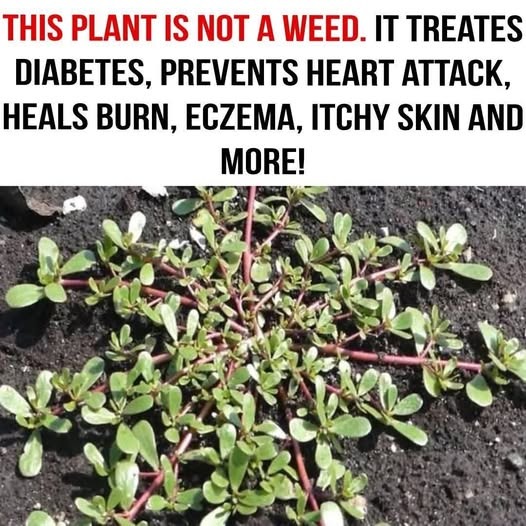
Purslane, also known as Portulaca oleracea, is a plant commonly found across the United States.
Its other names include pigweed, little hogweed, and fatweed. It’s also a popular potherb in Asia and Europe, especially in the Mediterranean region.
Not only is it fairly easy to grow, it’s rich in vital minerals and vitamins with antioxidant properties.
It’s no wonder that this succulent has been long used in ancient medicine, particularly in Chinese tradition, which describes it as “the vegetable for long life”.
The Nutritional Content of Purslane
This succulent is high in many nutrients including vitamin A, E, and C, calcium, magnesium, manganese, potassium, and iron. It also has small amounts of folate, phosphorus, copper, as well as vitamins B1, B2, and B3.
Purslane is 93% water, and therefore it’s low in calories, making it extremely nutritionally-dense. It’s also a versatile food that could be aded to a plethora of dishes.
CONTINUE READING NEXT PAGE
High in Omega-3 Fatty Acids
Omega-3 fatty acids are crucial fats the body isn’t able to develop on its own, so it must get it from foods.
Many people associate this nutrient with fatty fish such as salmon, but purslane is an example of a plant-based source.
There is not much fat in this plant, but what’s there is largely in the form of omega-3s, according to Healthline.
Moreover it has two types of these fatty acids: ALA and EPA. ALA appears in many plants, such as spinach, but purslane contains 5 to 7 times more.
Additionally, EPA is usually found in animal products and algae, and it’s generally not found in land plants. EPA is also more active in the body than ALA.
High in Antioxidants
The vitamins in purslane contain various antioxidants. For example, vitamin C is also called ascorbic acid and it helps maintain the wellbeing of bones, skin, and muscles.
Meanwhile, vitamin A has beta-corotene, which is famous for promoting good eye health. And it has alpha-tocopherol, a type of vitamin E that may protect cell membranes from external damage.
At the same time, this plant contains compounds with antioxidants, such as glutathione and betalain, which help protect cell damage and betalain. Plus, it has melatonin, which is a hormone that can aid sleep.
High in Potassium and Calcium
Antioxidants are not the only beneficial compounds in this weed. Purslane is also a good source of potassium, magnesium, and calcium.
Scientific evidence has linked potassium intake to lowered blood pressure, which can improve heart health.
Meanwhile, calcium plays a central role in kidney function, digestion, and most famously, bone health, according to a 2019 review.
For that reason, increased calcium intake is typically recommended for people with hypoparathyroidism, malabsorptive bowel disease, and osteoporosis.
High in Magnesium
The Nutrition Source explains that magnesium aids many bodily functions, including regulating blood sugar, blood pressure, muscles and nerves, as well as building proteins and strengthening bones.
A diet rich in magnesium may help lower the risk of certain diseases like high blood pressure and migraines. (Clinical trial results are mixed if these benefits can come from supplementation. Therefore, researchers recommend getting magnesium from food.)
NEXT PAGE
ADVERTISEMENT
