
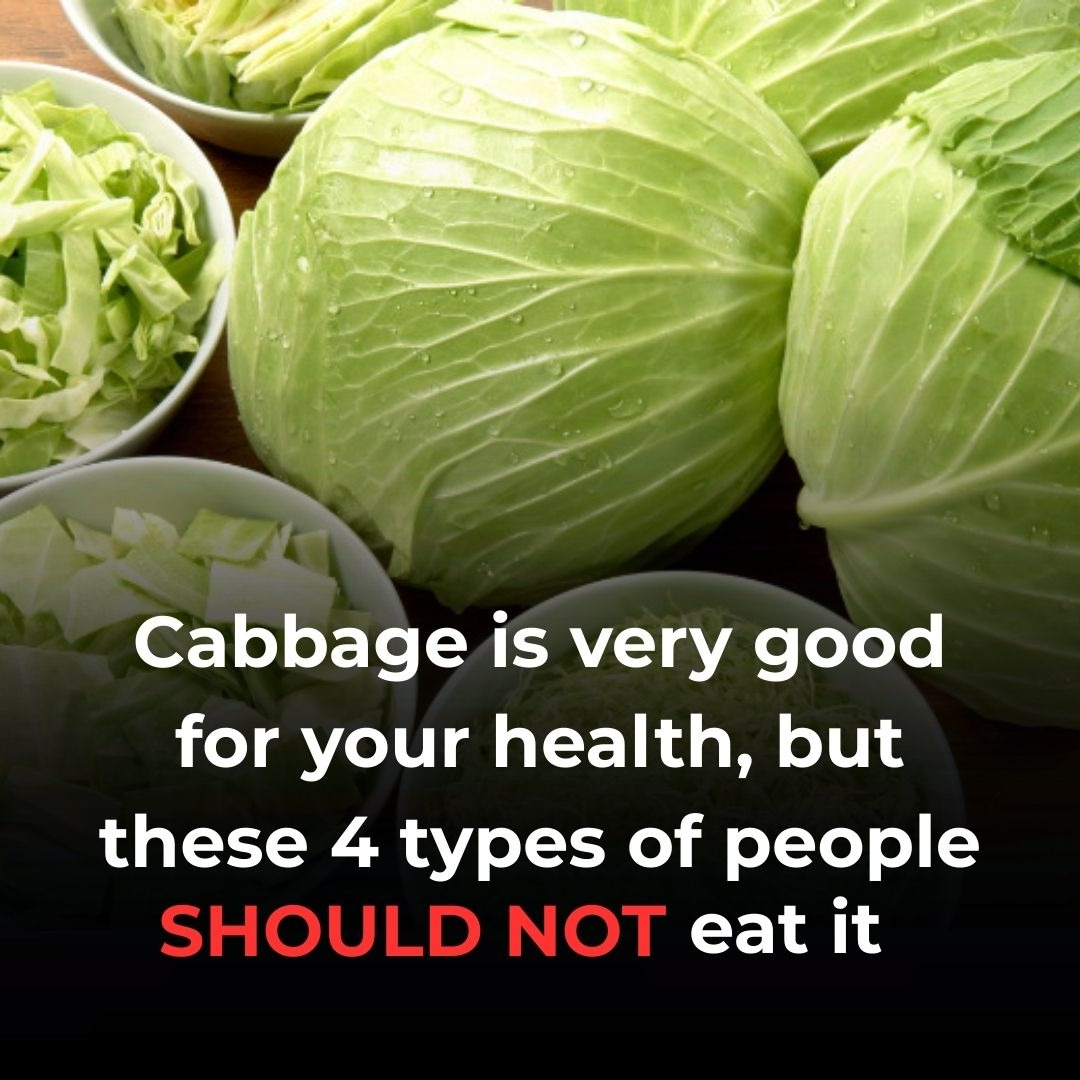
Cabbage is a nutritional powerhouse.
Low in calories, high in fiber, vitamin C, and cancer-fighting compounds like glucosinolates — it’s a staple in salads, soups, slaws, and fermented dishes like sauerkraut and kimchi.
But while this cruciferous veggie is healthy for most, some people may experience discomfort or complications from eating large amounts — especially raw or uncooked.
Let’s explore four groups who may benefit from limiting cabbage, along with smart, gentle ways to still enjoy its benefits — so you can eat wisely, not fearfully.
Because real wellness isn’t about cutting out foods.
It’s about understanding your body — and adapting with care.
🔍 Should You Avoid Cabbage?
For the vast majority of people — no.
Cabbage supports gut health, immunity, and long-term disease prevention.
But if you fall into one of these categories, you may want to modify how much or how you eat it:
1. People with Hypothyroidism (Especially Iodine Deficiency)
Why?
Cabbage contains goitrogens — natural compounds that can interfere with thyroid function by blocking iodine uptake
This effect is usually only a concern with very high intake and low iodine levels
✅ Reality Check:
Cooking (steaming, boiling) reduces goitrogenic activity by up to 90%
In countries with iodized salt (like the U.S.), clinical issues are rare
Fermented cabbage (kimchi, sauerkraut) may have higher goitrogen levels
💡 What to Do:
Eat cabbage in moderation
Cook it instead of eating raw daily
Ensure adequate iodine intake (iodized salt, seafood, dairy)
Talk to your doctor before making big dietary changes
🩺 Not needed: Complete avoidance unless advised medically.
2. People with Digestive Sensitivities (IBS, SIBO, FODMAP Intolerance)
Why?
Cabbage is rich in raffinose, a type of FODMAP sugar that ferments in the gut
Can cause bloating, gas, cramping, and diarrhea in sensitive individuals
✅ Common triggers:
Raw coleslaw
Large portions of sauerkraut
Daily juicing with raw cabbage
💡 What to Do:
Try small servings of cooked cabbage (easier to digest)
Follow a low-FODMAP diet under guidance if needed
Monitor symptoms and adjust intake
📌 Many tolerate cooked cabbage well — even with IBS.
3. People on Blood Thinners (Like Warfarin / Coumadin)
Why?
Cabbage is high in vitamin K — a nutrient that helps blood clot
Fluctuating vitamin K intake can affect how warfarin works
⚠️ Important: You don’t need to avoid cabbage — just keep your intake consistent day to day
💡 What to Do:
NEXT PAGE
ADVERTISEMENT
