
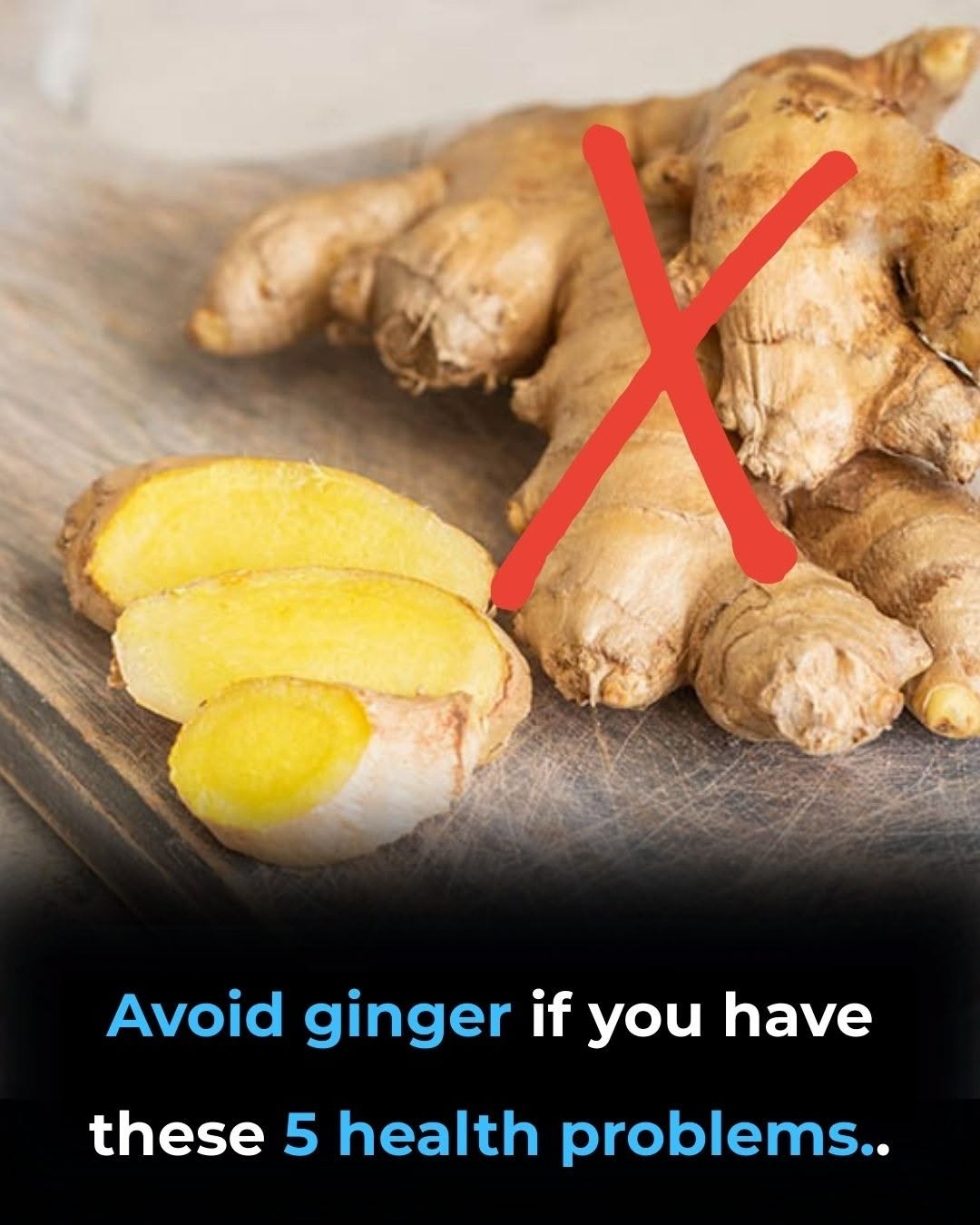
Ginger is celebrated for its soothing effects on nausea, its anti-inflammatory properties, and its warm, zesty flavor. For most people, it’s a safe and beneficial addition to food or tea.
But ginger isn’t right for everyone.
If you have certain health conditions or take specific medications, ginger—even in culinary amounts—could pose risks. Understanding these contraindications helps you enjoy ginger safely or choose alternatives when needed.
If you’ve ever wondered whether that ginger tea or supplement is right for you, you’re in the right place. Let’s explore the five health situations where caution with ginger is advised—backed by science, explained with care.
⚠️ The 5 Health Situations Where Ginger Should Be Avoided or Used With Caution
1. Bleeding Disorders or Use of Blood-Thinning Medications
Why caution is needed: Ginger has natural antiplatelet and anticoagulant properties, meaning it can slow blood clotting
www.msdmanuals.com
. When combined with blood-thinning medications like warfarin (Coumadin), aspirin, or clopidogrel, ginger may increase the risk of bruising or bleeding
www.verywellhealth.com
.
✅ What to do:
If you have a bleeding disorder (like hemophilia) or take anticoagulants, talk to your healthcare provider before using ginger supplements
www.msdmanuals.com
.
Culinary amounts of ginger in food are generally considered safe, but high-dose supplements (above 1 gram daily) warrant discussion
www.webmd.com
.
Stop ginger at least 2 weeks before scheduled surgery to reduce bleeding risk
www.webmd.com
.
2. Gallbladder Disease or Gallstones
Why caution is needed: Ginger stimulates bile production, which can help digestion in healthy people—but if you have gallstones, bile duct inflammation, or cholecystitis, increased bile flow may trigger pain or complications
peptiko.gr
www.verywellhealth.com
.
✅ What to do:
If you have known gallbladder issues, avoid concentrated ginger supplements
www.rxlist.com
.
Small amounts of ginger in cooking are usually well-tolerated, but monitor for discomfort.
Discuss with your gastroenterologist before adding ginger therapeutically.
3. Diabetes (Especially If Taking Medication)
Why caution is needed: Ginger may lower blood sugar levels and increase insulin sensitivity
www.rxlist.com
www.healthdigest.com
. While this sounds beneficial, combining ginger with diabetes medications (like insulin, metformin, or sulfonylureas) could cause blood sugar to drop too low (hypoglycemia)
www.webmd.com
.
✅ What to do:
If you take diabetes medication, monitor your blood sugar closely if adding ginger regularly
www.chemistdirect.co.uk
.
Start with small culinary amounts and track your levels before increasing intake.
Work with your healthcare provider to adjust medications if needed.
4. Heart Conditions or Low Blood Pressure
Why caution is needed: High doses of ginger may lower blood pressure and affect heart rhythm
www.komen.org
www.webmd.com
. For people with certain heart conditions (like arrhythmias) or those taking blood pressure medications (like calcium channel blockers), this could lead to dizziness, fainting, or unstable blood pressure
www.webmd.com
.
✅ What to do:
If you have heart disease or take blood pressure medications, use ginger in moderation
hillvitalusa.com
.
Avoid high-dose supplements without medical supervision.
Watch for symptoms like lightheadedness, unusual fatigue, or palpitations.
5. Upcoming Surgery or Dental Procedures
Why caution is needed: Because ginger can slow blood clotting, it may increase bleeding risk during and after surgical or dental procedures
rollingout.com
www.webmd.com
.
✅ What to do:
Stop taking ginger supplements at least 2 weeks before any scheduled surgery or invasive dental work
www.webmd.com
.
Inform your surgeon or dentist about all supplements you take, including ginger.
Culinary ginger in food is usually fine, but confirm with your care team.
🩺 Other Situations to Discuss With Your Provider
While not absolute contraindications, these scenarios warrant a conversation:
✨ Pregnancy: Ginger is commonly used for morning sickness and appears safe in moderate amounts (up to 1 gram daily)
rollingout.com
. However, high doses near delivery may increase bleeding risk—discuss timing and dosage with your OB-GYN
www.komen.org
.
✨ Breastfeeding: Limited data exists on ginger safety during lactation. Small culinary amounts are likely fine, but avoid high-dose supplements without provider guidance
NEXT PAGE
ADVERTISEMENT
