
The fix: Defogger + Fresh Air mode + AC (even with heat on) = clear windows.
2. For Long Drives to Prevent “Stale Air” Sleepiness
After 15-20 minutes on recirculation, the air can become stale as carbon dioxide from your exhaled breath builds up. This can cause drowsiness and reduced concentration.
What to do: If you’re on a long drive and feeling stuffy or tired, switch to fresh air for a few minutes to reintroduce oxygen.
Discover more
Stuffing Mixes
Stuffed
Food & Drink
3. When Carrying Several Passengers
More people = more moisture and CO₂. Use recirc sparingly in a full car, or be diligent about switching to fresh air periodically.
4. When the AC Is Running Efficiently
Once your car is comfortably cool, you can switch to fresh air mode to bring in oxygen while maintaining temperature. The AC will work a little harder, but you’ll have fresher air.
Why This Button Matters for Your Health and Comfort
Situation Recirculation ON Recirculation OFF
Heavy traffic Keeps exhaust fumes out Pulls exhaust fumes in
Hot day Cools faster, saves AC wear Slower cooling, harder on AC
Foggy windows Makes fog worse Clears fog
Long trip Air gets stale Fresh oxygen
Smelly area Keeps odors out Pulls odors in
The Pro-Tip Summary: Your Quick-Reference Guide
Situation Recirculation Setting
Stuck in traffic / tunnel ✅ ON
Summer, blazing heat ✅ ON (after initial venting)
Winter, foggy windows ❌ OFF + Defrost ON
Passing a farm or landfill ✅ ON
Long road trip ❌ OFF occasionally for fresh air
High pollen/allergy season ✅ ON (with good cabin filter)
Car full of people ❌ OFF periodically
Bonus: Fuel Efficiency and AC Lifespan
Using recirculation mode on hot days isn’t just about comfort—it’s also about efficiency. When your AC doesn’t have to constantly cool hot outside air, it works less hard. This can:
Improve fuel economy slightly (AC usage affects mileage)
Extend the life of your AC compressor
Cool the cabin faster
A Word About Cabin Air Filters
For recirculation mode to work effectively for air quality, your cabin air filter needs to be clean. This filter traps pollen, dust, and pollutants before air enters your cabin. Replace it according to your vehicle’s maintenance schedule (usually every 12,000-15,000 miles or once a year).
The Bottom Line
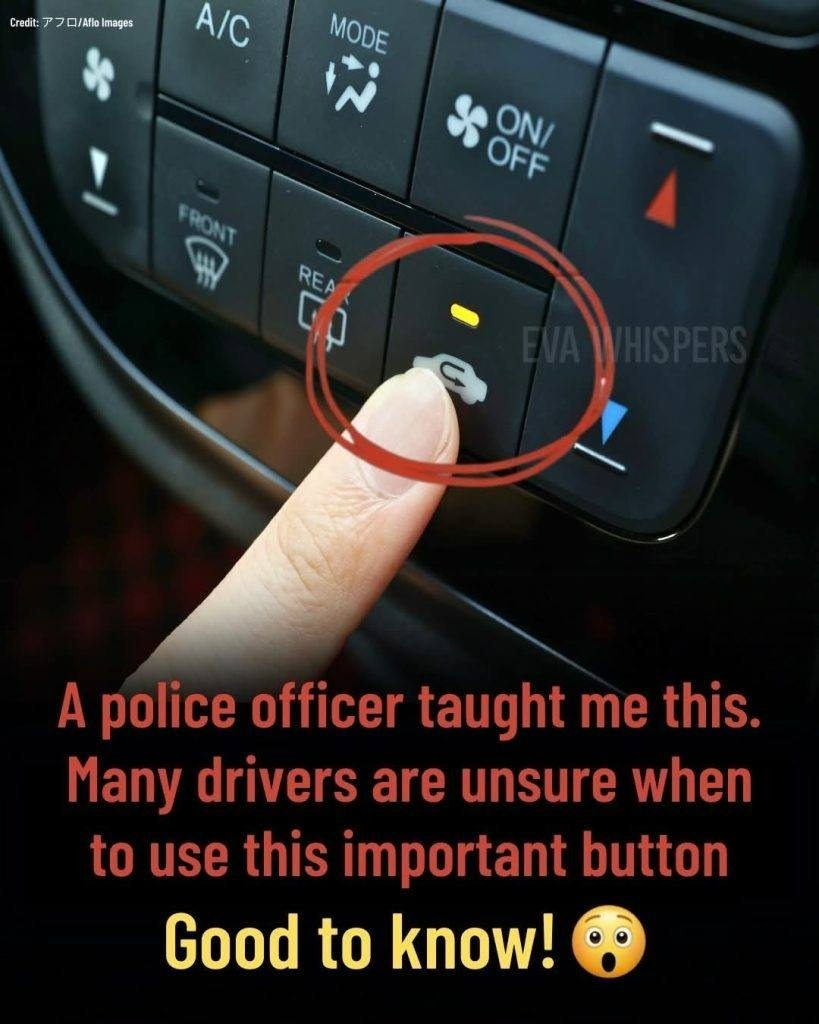
That little button with the car and the curved arrow isn’t just a mysterious icon—it’s a powerful tool for your comfort, safety, and health.
Use it in traffic, on hot days, and when you need to keep smells out.
Turn it off when windows fog, on long trips, and when you need fresh air.
Once you start using it with intention, you’ll wonder how you ever drove without this simple knowledge.
That little button? It matters more than you think.
ADVERTISEMENT
