
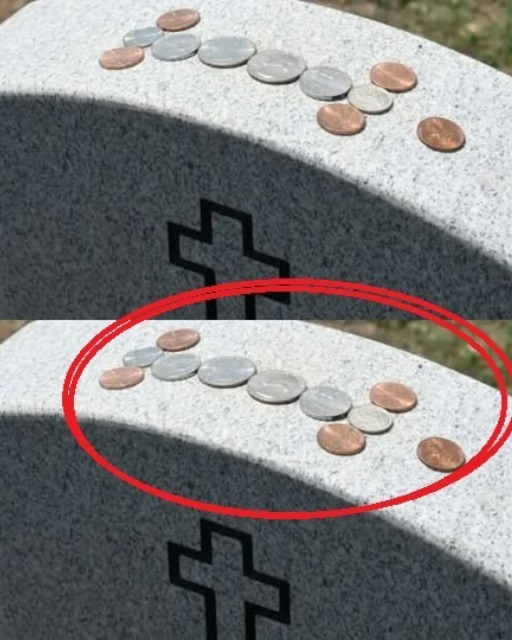
Each denomination of coin carries a specific message, allowing visitors to communicate their relationship to the deceased in a deeply personal way. Understanding these meanings transforms how we view those seemingly ordinary coins resting on headstones.
The Language of Coins
Here’s what each type of coin signifies:
Penny: “I Remember You”
A penny is perhaps the most common coin found on gravestones. It symbolizes a basic acknowledgment—a visitor stopping by to say, “I saw your name. I remembered you.” While the person leaving the penny may not have known the deceased personally, their gesture ensures that the individual is not forgotten. For families visiting the grave, finding a penny can provide comfort, knowing that others took a moment to honor their loved one’s memory.
Nickel: “We Served Together”
Leaving a nickel indicates a deeper bond—the giver trained alongside the deceased during boot camp. This coin represents shared experiences like enduring grueling drills, complaining about chow lines, and forming camaraderie under challenging circumstances. A nickel speaks to the foundational connections forged before deployments, battles, or medals entered the picture. It honors the beginning of a soldier’s journey and the friendships built along the way.
Dime: “We Fought Side by Side”
A dime takes the connection even further, signifying that the person who left it served with the deceased in combat. They might have been in the same unit, fought in the same missions, or even shared a foxhole. This coin reflects a profound bond born out of stress, fear, and survival. By leaving a dime, the giver silently declares, “I stood beside you. I witnessed your courage firsthand.”
Quarter: “I Was There When You Died”
Of all the coins, a quarter carries the heaviest weight. It signifies that the person leaving it was present when the soldier died—perhaps holding their hand, trying to save them, or simply bearing witness to their final moments. A quarter says, “I was with you at the end,” offering a poignant reminder of ultimate sacrifice. It’s a gesture laden with emotion and reverence, speaking volumes without uttering a word.
An Unspoken Language of Grief and Respect
What makes this tradition so beautiful is its simplicity and universality. There’s no need for grand gestures or formal ceremonies. Visitors don’t have to announce themselves or leave notes explaining their presence. The coins speak for themselves, quietly conveying messages of love, gratitude, and solidarity. Yet, once you understand their significance, walking past a coin-laden gravestone becomes impossible without pausing to reflect.
For families of the fallen, discovering coins left by strangers can bring immense solace. Even if they’ll never know who placed them there, the coins serve as tangible proof that someone remembers. Someone cares. In a world where grief can feel isolating, these small acts of remembrance create a sense of community and continuity.
Why Coins?
Continued on the next page
ADVERTISEMENT
