
Back to this Plant
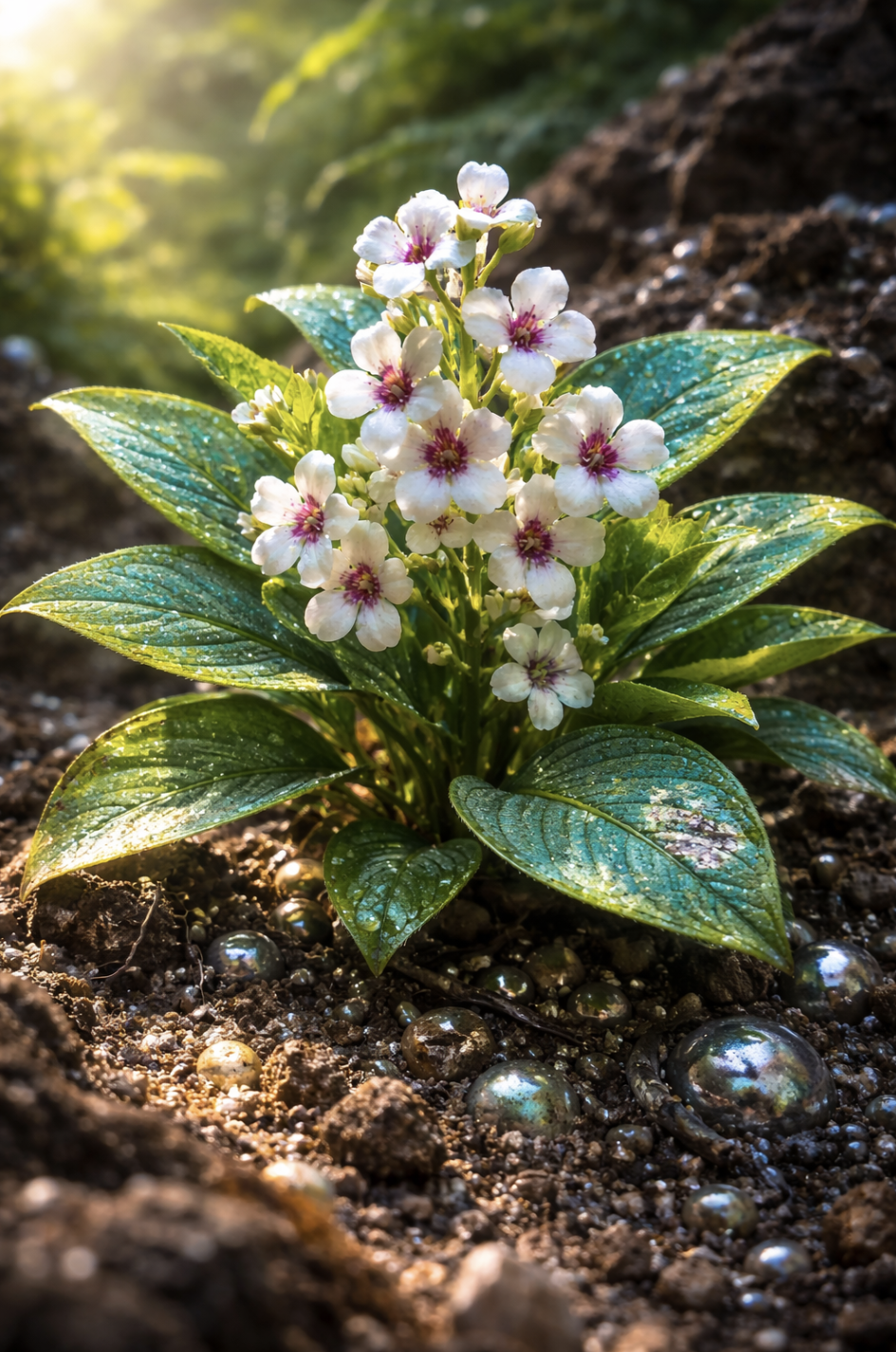
While many hyperaccumulators exist, Rinorea niccolifera is especially promising for a ton of reasons. Nickel is valuable as it’s used in batteries and stainless steel, and demand is rising fast. This plant also tolerates extreme levels, it doesn’t just absorb nickel, it actually flourishes with it. It’s native to the Philippines, a country rich in nickel ore, but burdened by extraction damage. Also, it evolved in a hypertoxic environment, meaning it’s already adapted for the worst.
This is a plant that has danced with poisons and called them nourishment, laughed in the face of danger and continued to bloom despite of it. It doesn’t just grow despite the damage, it makes the damage a part of itself.
I believe cities should start planting rings of hyperaccumulators around highways, there could be rooftop gardens that don’t just feed, but clean. Mining companies could one day be mandated to grow metal-absorbing forests post-extraction. Abandoned industrial sites could become reborn as slow-growing metal farms. It could bring about a city that heals as it grows.
I wish on my commute to work I could pass through a jungle of green things quietly scrubbing the air and sipping up toxins from forgotten ground. Leaves that grow are as important as laws in reversing environmental harm.
Of course, there are still challenges that people like to point out on the interwebs. Time being the biggest one, and yeah, plants are slower than machines. Land space could be an issue for the large-scale phytomining that requires fields. Yields are honestly lower and metals extracted per acre are modest at this moment in time.
Many hyperaccumulators are poorly studied or undocumented too, which makes it a little tricky. Mining is also a massive, entrenched industry slow to change, but for all these challenges, there’s also some momentum.
In France, Australia, and Malaysia, pilot programs are already proving viable, and in developing countries, where mining is both economically critical and environmentally devastating, phytomining might be the most realistic compromise.
At its root, this is my favorite kind of story which brings together plants and cooperation with nature, not domination.
We spent the 20th century trying to tame the earth, the 21st should be about listening to it.
Rinorea niccolifera doesn’t need us to create something new, it needs us to notice what was already there.
ADVERTISEMENT
