
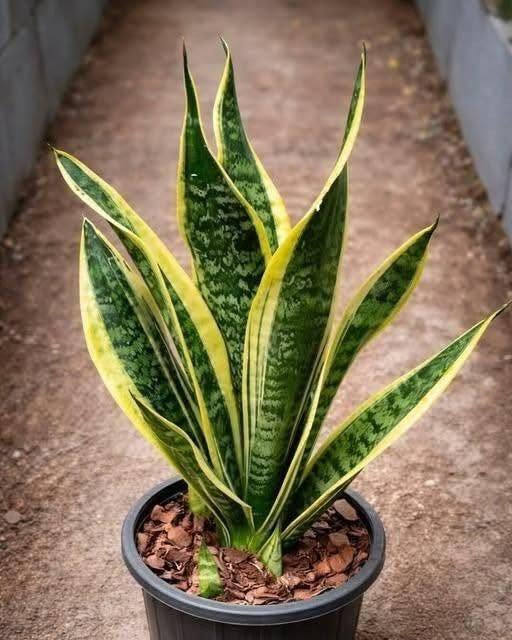
The psychological benefit: Caring for a living thing—even an easy one—can reduce stress, boost mood, and provide a sense of purpose.
How to Care for a Snake Plant (It’s Easy)
Let me give you the simple care instructions.
Light
Prefers: Bright, indirect light
Tolerates: Low light, fluorescent light, even shade
Avoids: Direct, scorching sunlight (which can burn the leaves)
Pro tip: Snake plants are excellent for offices and dark corners where other plants would struggle.
Water (The Most Common Mistake)
Snake plants are succulents. They store water in their thick leaves.
Water only when the soil is completely dry. Stick your finger 1-2 inches into the soil. If it’s dry, water. If it’s damp, wait.
In winter, water even less (once every 3-6 weeks).
Err on the side of underwatering. Overwatering is the #1 killer of snake plants (causes root rot).
Soil
Use a well-draining potting mix. Cactus/succulent mix is ideal. Regular potting soil mixed with perlite or sand also works.
Temperature
Snake plants prefer temperatures between 60-80°F (15-27°C). They can tolerate cooler temperatures, but avoid frost.
Fertilizer
Snake plants are not heavy feeders. Fertilize once or twice a year (in spring and summer) with a balanced, water-soluble fertilizer diluted to half strength.
Repotting
Snake plants like to be root-bound. Repot every 2-5 years, or when the roots are visibly crowding the pot.
Where to Place Snake Plants for Maximum Benefit
Location Benefit
Bedroom Releases oxygen at night, improves air quality while you sleep
Living room Filters toxins, adds visual interest
Home office Boosts focus, reduces stress, improves air quality
Bathroom Tolerates low light and humidity (but don’t overwater)
Entryway Feng shui protection, welcomes guests with clean air
Near electronics Helps offset VOCs emitted by computers, printers, and TVs
Safety Note (Important!)
Snake plants are mildly toxic to cats and dogs. They contain saponins, which can cause nausea, vomiting, and diarrhea if ingested.
What to do: If you have pets that chew on plants, keep snake plants out of reach (on a high shelf or in a room your pets don’t access). If your pet does ingest part of a snake plant, contact your veterinarian.
Frequently Asked Questions
Does the snake plant really purify air?
Yes. The NASA study confirmed that snake plants remove toxins like formaldehyde, benzene, and xylene from indoor air. However, one plant won’t purify an entire room—place several plants throughout your home for measurable benefits.
Does the snake plant produce oxygen at night?
Yes. Snake plants use CAM photosynthesis, which allows them to continue releasing oxygen after dark. This is unusual among houseplants and makes them excellent for bedrooms.
Is the snake plant good for beginners?
Absolutely. It’s one of the most forgiving houseplants. It tolerates neglect, low light, and irregular watering.
Why are the leaves falling over?
Overwatering (root rot) or the plant has become too tall for its pot. Check the soil. If it’s soggy, let it dry out completely. If the plant is top-heavy, repot into a heavier container or stake the leaves.
Can I propagate a snake plant?
Yes. You can propagate by leaf cuttings (cut a leaf into 2-3 inch sections, plant in soil) or by dividing the rhizomes (separate a clump of leaves with roots attached).
Do snake plants flower?
Rarely indoors. When stressed (or sometimes just happy), snake plants produce tall spikes with small, fragrant white or greenish flowers.
How tall do snake plants grow?
Most varieties grow 2-4 feet tall. Some dwarf varieties stay under 6 inches. Larger varieties can reach 6 feet.
A Blessing in a Pot
Here’s what I love most about the snake plant.
It doesn’t demand attention. It doesn’t wilt when you forget to water it. It doesn’t need constant sunlight or expensive fertilizer. It just sits there, quietly doing its job—filtering your air, releasing oxygen, making your home healthier.
My original snake plant is still thriving. I’ve propagated it into four additional plants that now live in my bedroom, my office, and my living room. They’re all thriving, too.
If you don’t have a snake plant yet, get one. Place it in your bedroom. Let it clean your air while you sleep.
And if you already have one? You already know. It’s a blessing.
Now I’d love to hear from you. Do you have a snake plant? Where do you keep it? Have you noticed a difference in your home? Drop a comment below – I read every single one.
And if this guide inspired you to add a snake plant to your home, please share it with a friend who loves easy, beneficial houseplants. A text, a link, a conversation. Good plants—and good information—are meant to be shared. 🌿💚
ADVERTISEMENT
