
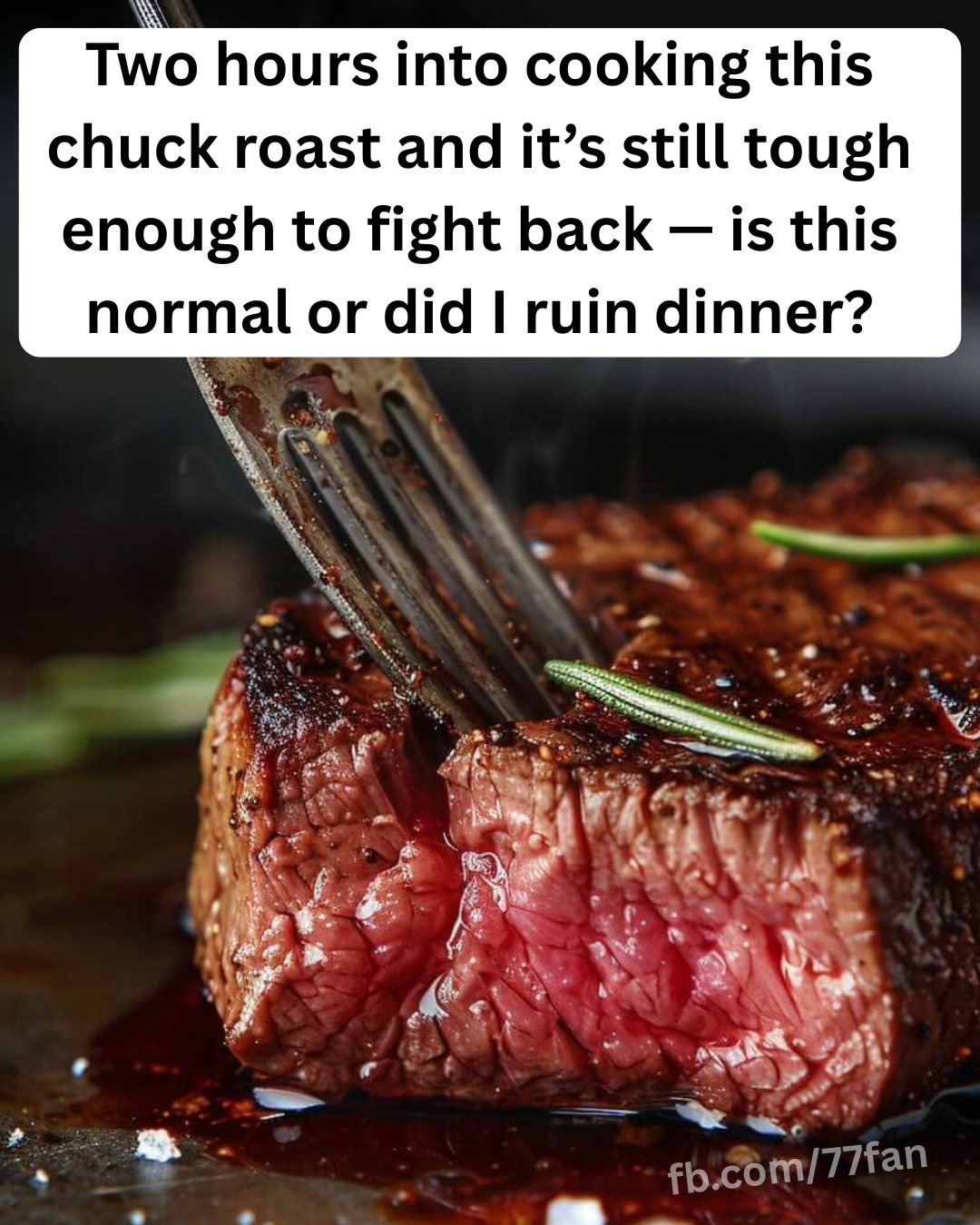
If it resists → not ready
If it slides in and pulls apart easily → done
That’s it. That’s the test.
You can use a thermometer too (around 190–205°F / 88–96°C is where magic happens), but honestly, the fork doesn’t lie.
Let’s Talk About Liquid—Because This One Sneaks Up on You
If your roast is drying out, it’s usually not the meat’s fault.
It’s the environment.
Chuck roast needs moisture—not to boil in, but to sit in a steamy, covered space where it can slowly soften.
If there’s not enough liquid, or the lid isn’t tight, things dry out fast.
A good rule:
There should be enough liquid to come about halfway up the roast.
Not submerged. Not dry. Somewhere in between.
A Small Trick That Makes a Big Difference
Add something acidic to your braising liquid.
Not a lot—just a splash.
A little wine
A spoon of tomato paste
A dash of vinegar
It won’t magically fix everything, but it helps break things down and deepens the flavor.
Same with umami boosters—soy sauce, Worcestershire, mushrooms.
It’s one of those subtle upgrades that makes the final dish taste like you tried harder than you did.
What If It’s Already Tough and Dinner’s in an Hour?
Okay, real-life scenario.
You’re short on time. The roast isn’t cooperating.
Two options:
Cut it into chunks and keep cooking
Smaller pieces break down faster
Switch gears completely
Shred what you can and turn it into tacos, sandwiches, or a quick stew
Not ideal—but honestly, it works more often than you’d expect.
Pressure Cookers—The Shortcut That Actually Works
If you’re in a hurry next time, a pressure cooker (like an Instant Pot) changes the game.
It speeds up that collagen breakdown dramatically.
You can get tender, pull-apart beef in about an hour instead of half a day.
Is it exactly the same as slow braising? Not quite.
But it’s close enough—and way more convenient on busy days.
The Mistake Almost Everyone Makes (At Least Once)
Stopping too early.
That’s really it.
Not bad seasoning. Not the wrong pan. Not even the wrong method most of the time.
Just… not enough time for the transformation to finish.
So If Your Chuck Roast Is Still Tough…
Don’t toss it. Don’t assume it’s ruined.
It probably just needs more time.
Lower the heat a bit if needed, make sure there’s enough liquid, cover it well… and let it keep going.
Because once it crosses that line—from tough to tender—you’ll know.
It won’t need explaining.
ADVERTISEMENT
