
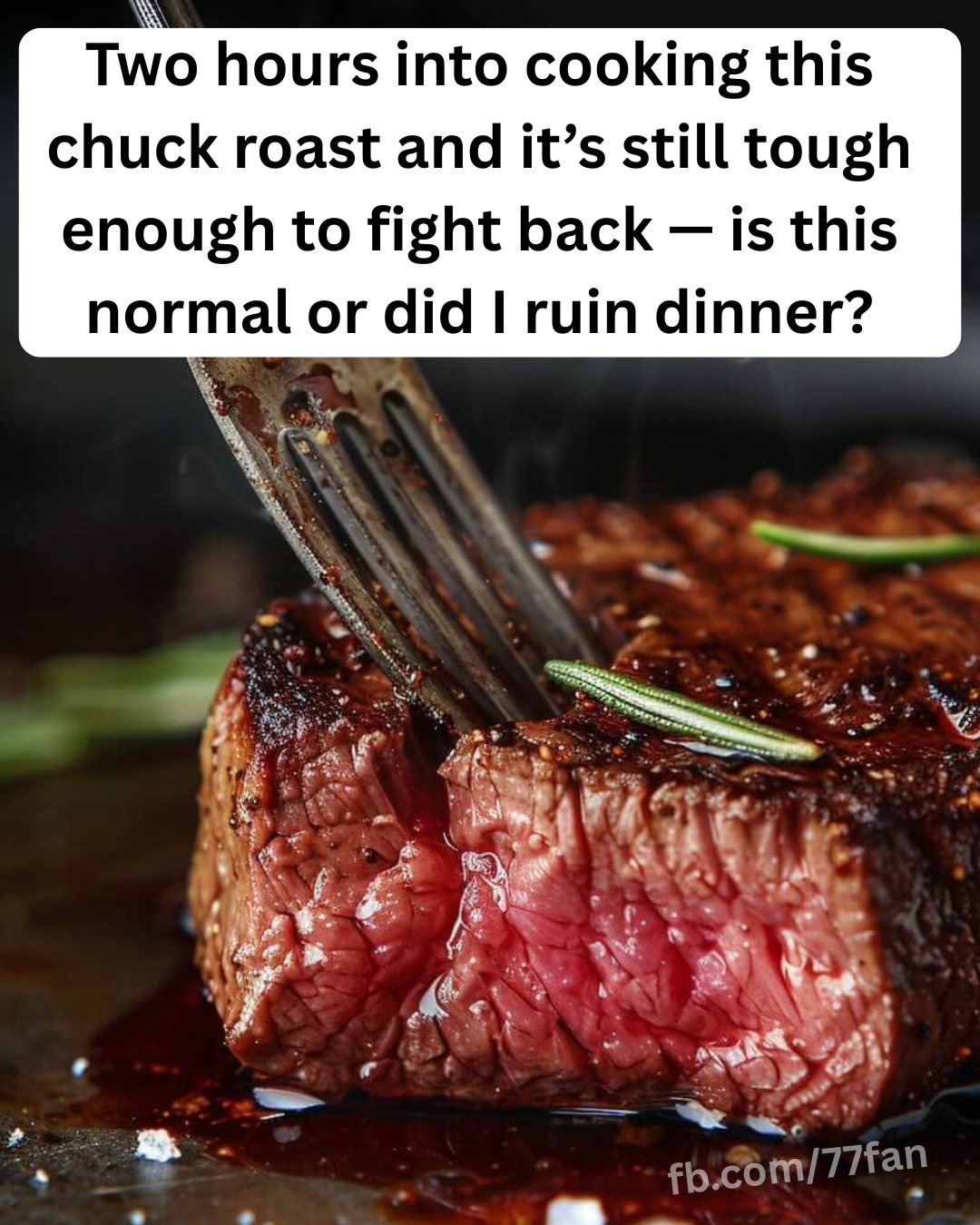
You ever pull a chuck roast out of the pot after hours—like hours—and think…
“Wait… why is this still chewy?”
Because yeah. That moment is frustrating.
You planned dinner around it. The house smells amazing. Everything seems right. And then you cut into it and… it fights back. Not quite rubber, not quite tender. Just… stubborn.
If that’s happened to you, you didn’t mess it up. Not really.
This is one of those recipes where doing almost everything right still gives you the wrong result.
Let me explain what’s actually going on—because once you understand this, chuck roast gets a whole lot easier.
First—Chuck Roast Is Supposed to Be Tough
This part surprises people.
A chuck roast isn’t naturally tender. It comes from the shoulder of the cow, which is basically a hardworking muscle. Lots of movement, lots of connective tissue.
That’s why it’s packed with flavor… but also why it can feel like chewing on something you didn’t sign up for.
So if your roast is tough, it doesn’t mean it’s bad meat.
It just means it hasn’t changed yet.
The Real Problem Isn’t Time—It’s What Happens During That Time
Here’s the part most recipes don’t explain very well.
Chuck roast doesn’t magically get tender just because it’s been cooking for a long time.
What actually needs to happen is this:
The collagen (that tough connective tissue) has to slowly melt into gelatin.
That’s the moment everything changes.
Before that happens? Tough.
After that happens? Fall-apart, juicy, rich.
And here’s the catch…
There’s this awkward middle stage where the meat has cooked for hours… but the collagen hasn’t fully broken down yet.
That’s where most people stop.
The “It’s Been 2 Hours, It Should Be Done” Trap
Honestly, two hours feels like a long time. It should be enough, right?
Not for chuck roast.
At two hours, you’re usually right in that in-between phase:
The meat is cooked
But the connective tissue is still holding on
So it feels dry and tough at the same time—which is the worst combo.
And this is where people give up too early.
Ironically, the fix is almost always the same:
Keep cooking it.
Low and Slow Isn’t Just a Saying—It’s the Whole Game
You’ve probably heard “low and slow” a million times. It sounds like one of those cooking clichés people repeat without thinking.
But in this case, it actually matters.
If the temperature is too high, the meat tightens up before the collagen has time to break down. So you end up with a roast that’s cooked… but still tough.
If it’s too low, it’ll eventually get there—but it might take forever.
The sweet spot is usually somewhere around 275–325°F (135–160°C) in the oven, or low in a slow cooker.
And then you wait. Longer than feels reasonable.
Here’s the Weird Part—It Gets Worse Before It Gets Better
This is the part nobody tells you.
A chuck roast can actually feel tougher before it becomes tender.
So you check it at hour three, and it’s still firm. Maybe even drier than before. And you think, “Great, I ruined it.”
You probably didn’t.
You’re just not at the finish line yet.
Give it another hour. Sometimes two.
And then suddenly, it gives. Like it just… lets go.
Oven vs Stovetop vs Slow Cooker—Does It Really Matter?
A little, but not as much as you think.
Oven braising is probably the most reliable. Steady heat, less babysitting.
Slow cooker is the easiest—set it and forget it, especially for 8+ hour cooks.
Stovetop works, but you have to watch it. Heat can fluctuate, liquid can evaporate faster.
So yeah, method matters—but time and temperature matter more.
You can get a perfect roast with any of them if those two things are right.
Quick Reality Check—Is It Undercooked or Overcooked?
This trips people up.
If your roast is:
Tough and chewy → it’s undercooked (yes, even after hours)
Falling apart but dry → it’s overcooked
Tender, juicy, easy to pull → that’s the sweet spot
So if it’s tough? Don’t toss it. Don’t panic.
Just… keep going.
The Fork Test (Still the Best Test)
Forget complicated rules for a second.
Take a fork and twist it gently into the meat.
NEXT PAGE
ADVERTISEMENT
