
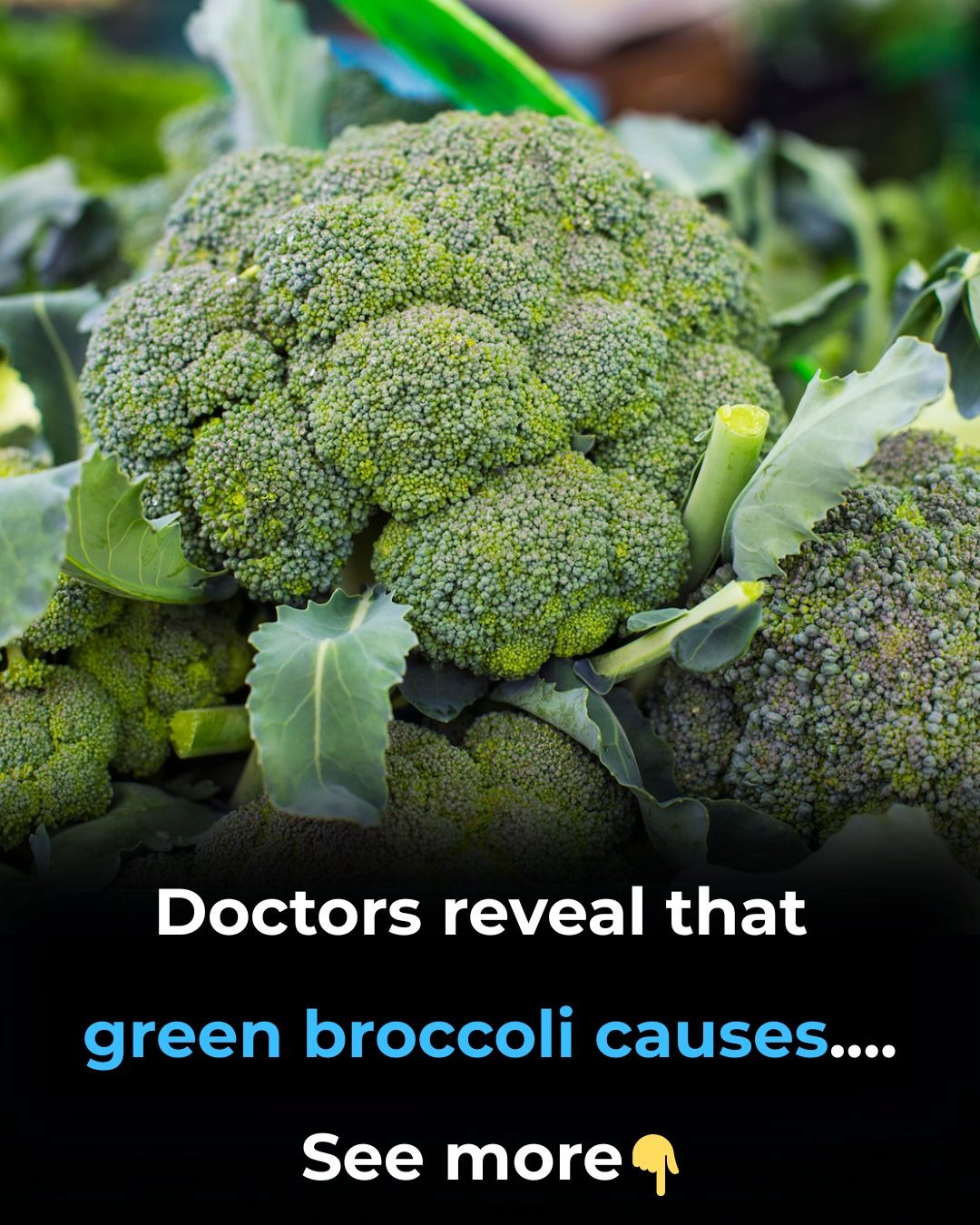
ou may have seen alarming headlines like:
“Doctors Reveal That Green Broccoli Causes [Fill-in-the-Blank]!”
But before you toss your broccoli in the trash—let’s cut through the fear-mongering with science. The truth is, broccoli is one of the most nutrient-dense, health-promoting vegetables on the planet. However, like all foods, it can cause issues in very specific contexts—mostly for people with certain medical conditions.
Here’s what doctors and dietitians actually say:
✅ What Broccoli Actually Does (The Good News)
Broccoli is packed with:
Fiber – supports gut health and digestion
Vitamin C – boosts immunity
Vitamin K – essential for blood clotting and bone health
Sulforaphane – a powerful antioxidant linked to reduced cancer risk
Folate, potassium, and iron – vital for cell function and energy
Major health organizations—including the American Cancer Society and Harvard T.H. Chan School of Public Health—consistently rank broccoli as a top anti-inflammatory, disease-fighting food.
⚠️ When Broccoli Might Cause Issues (Rare & Specific)
. Gas or Bloating (in Sensitive Digestive Systems)
Why: Broccoli contains raffinose, a complex sugar that gut bacteria ferment, producing gas.
Who it affects: People with IBS, SIBO, or sensitive digestion.
Solution: Cook broccoli (steaming helps), eat smaller portions, or try digestive enzymes like alpha-galactosidase (Beano).
2. Interference with Blood Thinners (Like Warfarin)
Why: Broccoli is high in vitamin K, which helps blood clot.
Who it affects: People on warfarin (Coumadin)—but only if intake fluctuates wildly.
Solution: Don’t avoid broccoli—just eat a consistent amount daily (e.g., 1 cup). Your doctor can adjust your dose accordingly.
3. Thyroid Function (Only in Extreme Cases)
Why: Broccoli contains goitrogens, compounds that can interfere with iodine uptake in the thyroid.
NEXT PAGE
ADVERTISEMENT
