
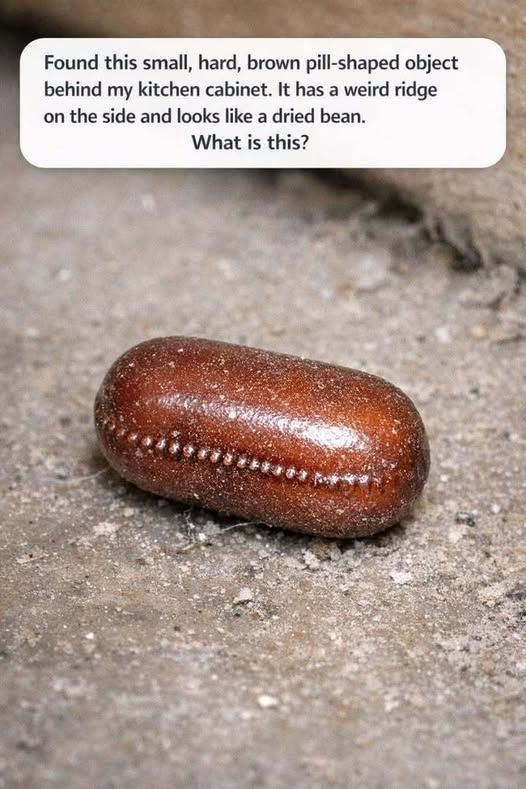
Finding a strange object behind a kitchen cabinet can be unsettling. If you come across a “small, hard, brown, pill-shaped object” with a “distinct ridge along the side” that resembles a dried bean, you’re most likely looking at a cockroach egg case, also known as an ootheca. While it may seem harmless at first glance, this tiny capsule is an important discovery. Knowing what it is—and how to deal with it—can help you keep your home clean and pest-free. Why This “Bean-Like” Object MattersSpotting a cockroach egg case is more than a minor inconvenience; it usually means pests are present…
Finding a strange object behind a kitchen cabinet can be unsettling. If you come across a “small, hard, brown, pill-shaped object” with a “distinct ridge along the side” that resembles a dried bean, you’re most likely looking at a cockroach egg case, also known as an ootheca.
While it may seem harmless at first glance, this tiny capsule is an important discovery. Knowing what it is—and how to deal with it—can help you keep your home clean and pest-free.
Why This “Bean-Like” Object Matters
Spotting a cockroach egg case is more than a minor inconvenience; it usually means pests are present and reproducing. These cases are built to be tough and protective.
Each ootheca can contain dozens of eggs—anywhere from 10 to 50 depending on the species. If left alone, they can hatch and quickly turn a small issue into a full infestation. Acting early helps reduce exposure to bacteria and allergens that cockroaches can spread.
How to Recognize an Ootheca
At first glance, these cases can look like seeds or beans, but there are clear features that set them apart:
Shape: Oval or capsule-like
Color: Light tan to dark reddish-brown
Texture: Firm, leathery outer shell
Size: Typically 5–9 mm long
The Purpose of the Side Ridge
A key identifying feature is the noticeable ridge running along o
ne side. This is actually a seam.
When the eggs inside are ready to hatch, the case splits open along this line. If the ridge appears cracked or open, the insects have likely already emerged. If it’s sealed, the eggs may still be inside.
Common Hiding Spots
Cockroaches tend to place egg cases in areas that are warm, dark, and close to food or water. Check places like:
Behind or under kitchen cabinets
Gaps behind appliances such as refrigerators or stoves
Pantry corners and shelves
Cracks in walls, baseboards, or flooring
NEXT PAGE
ADVERTISEMENT
