
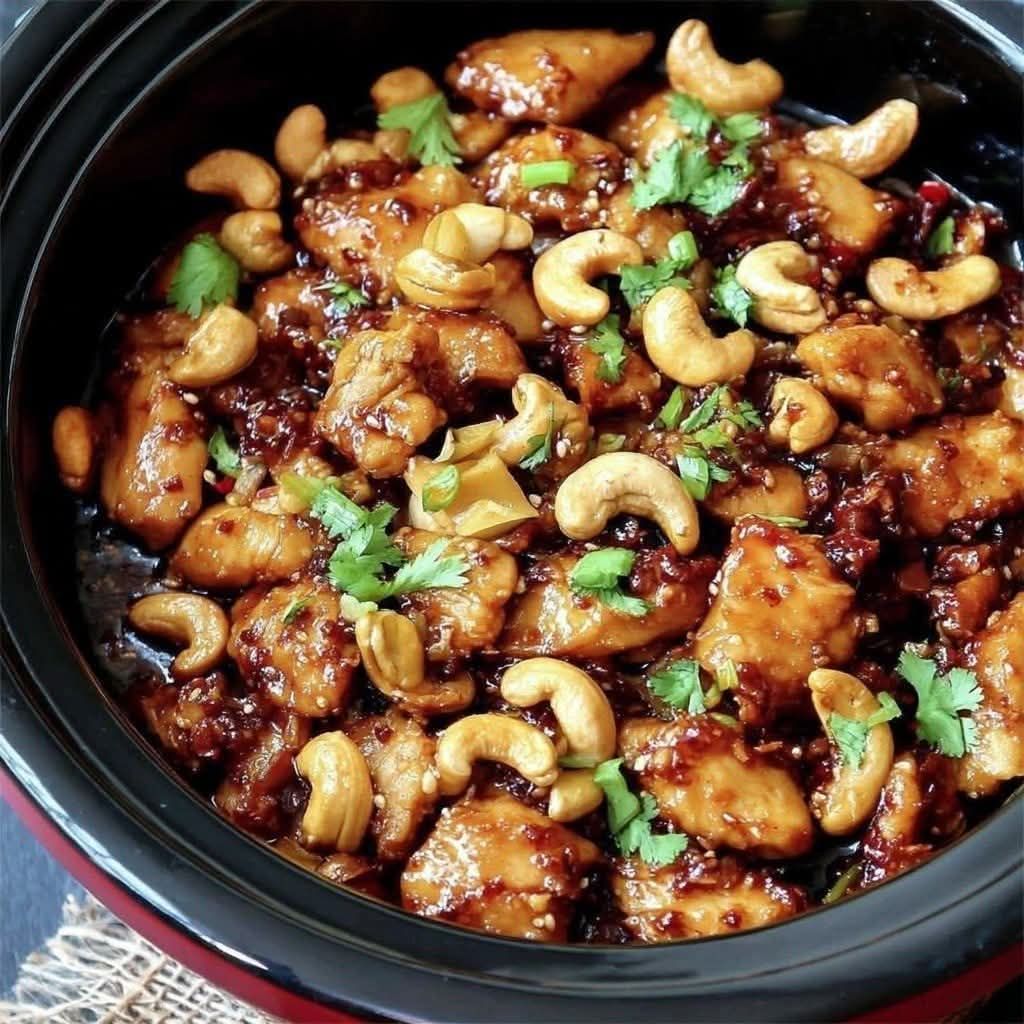
Add the cashews at the very end. This is the most important single tip for this recipe. Cashews added at the beginning or even in the middle of the slow cooker session will absorb liquid and turn completely soft — the crunch that defines cashew chicken disappears entirely. Stir them in immediately before serving to preserve everything that makes them worth including.
Use the cornstarch slurry. Without it, the sauce in the finished dish tends to be thin and watery rather than glossy and coating. Adding the slurry in the final 30 minutes thickens everything to the right consistency. If the sauce is still thinner than you’d like after the cooking time is up, you can transfer the liquid to a small saucepan and reduce it briefly over high heat before returning it to the slow cooker.
Don’t lift the lid repeatedly during cooking. Every time the lid comes off, heat escapes and adds meaningful time to the cooking process. Trust the process and leave it alone.
Taste and adjust the sauce before cooking. Everyone’s palate and everyone’s brand of soy sauce and hoisin is slightly different. Tasting the raw sauce and adjusting before it goes into the slow cooker takes 30 seconds and makes a significant difference to the finished dish.
Add vegetables in the final 30 minutes only. This applies to essentially every vegetable you might add. Anything put in at the start of a 3 to 4 hour cook will be soft, colorless, and texturally uninteresting by the time the chicken is done. The final 30 minutes gives vegetables enough time to cook through while retaining color and some structure.
Frequently Asked Questions
Can I use chicken breasts instead of thighs?
Yes, but monitor the cooking time carefully. Chicken breasts are leaner and have less fat and connective tissue to protect them from drying out over a long cook. Check them at the 2.5 to 3 hour mark on low — they may be done before the full time is up. Thighs are more forgiving and generally produce a juicier, more flavorful result in the slow cooker.
Is the searing step really necessary?
It’s optional, not required. The dish will taste good without searing. However, searing the cornstarch-coated chicken creates color and develops flavor through caramelization that the slow cooker cannot replicate, and the cornstarch coating sets more cleanly, helping the chicken hold its shape. If you have the time and an extra pan, it’s worth doing. If you’re in a hurry, skip it and the result will still be very good.
Can I make this gluten-free?
Yes. Substitute tamari or coconut aminos for the soy sauce, and check that your hoisin sauce is labeled gluten-free — most mainstream hoisin sauces contain wheat, but gluten-free versions are widely available. Cornstarch is naturally gluten-free, so no substitution is needed there.
How do I make this spicier?
Add a teaspoon of Sriracha or sambal oelek to the sauce mixture before cooking for a medium heat level. For more pronounced heat, add red pepper flakes with the sauce, or stir in fresh sliced chili with the vegetables in the final 30 minutes. The sweetness of the sauce means the dish can handle a fair amount of heat before it becomes overwhelming.
Can I make a vegetarian version?
Yes. Firm or extra-firm tofu, pressed and cubed, works well as a substitute. Press the tofu for at least 30 minutes first to remove excess moisture, then coat it lightly in cornstarch and add it to the slow cooker. Tofu doesn’t need as long as chicken — check it at the 2-hour mark on low. Chickpeas are another option that holds up better in the slow cooker without becoming mushy. Use vegetable broth in place of any chicken-based stock.
How do I store and reheat leftovers?
Store in an airtight container in the refrigerator for up to 4 days. Reheat gently in a skillet over medium-low heat, adding a small splash of water or soy sauce to loosen the sauce if it has thickened in the refrigerator. The microwave works for individual portions — stir halfway through for even heating. Store the cashews separately from the chicken if possible, or add fresh cashews when reheating to restore the crunch.
Variations Worth Trying
Spicy cashew chicken: Stir a tablespoon of Sriracha or a generous pinch of red pepper flakes into the sauce before cooking. Add thinly sliced fresh chili with the vegetables in the final 30 minutes for additional fresh heat on top of the slow-cooked background warmth.
Pineapple cashew chicken: Add chunks of fresh or canned pineapple to the slow cooker with the vegetables in the final 30 minutes. The pineapple’s natural sweetness and acidity play very well against the savory sauce and add a tropical note that makes the dish feel lighter and brighter.
Low-carb version: Serve over cauliflower rice instead of jasmine rice, or over zucchini noodles for an even lighter option. The sauce and chicken are naturally low in carbohydrates beyond the small amount of sugar in the sauce.
Extra vegetable version: Add water chestnuts, baby corn, mushrooms, or bok choy alongside the bell peppers and broccoli. Water chestnuts in particular are a classic cashew chicken component that adds a distinctive crunch even after cooking.
Sesame cashew chicken: Add a tablespoon of toasted sesame oil to the sauce and increase the sesame seed garnish generously. The sesame adds a nutty, toasty quality that complements the cashews and deepens the overall flavor of the dish.
Health Benefits Worth Knowing
Making cashew chicken at home rather than ordering it gives you meaningful control over what goes into the dish. Restaurant and takeout versions are often significantly higher in sodium and added oil than a homemade equivalent. Here, you can adjust the soy sauce quantity, use low-sodium versions, and control the amount of sugar in the sauce. Cashews themselves are genuinely nutritious — they’re rich in heart-healthy monounsaturated fats, magnesium, and copper, and they contribute meaningful protein and healthy fats to the meal. Chicken thighs are an excellent source of protein. Adding broccoli, bell peppers, and snap peas pushes the nutritional profile further, contributing fiber, vitamin C, and a range of antioxidants to what might otherwise be perceived as purely comfort food.
Meal Prep and Storage
Slow cooker cashew chicken suits meal prep very well. The chicken and sauce reheat beautifully and the flavor actually improves slightly after a night in the refrigerator as the sauce continues to season the chicken. Make a full batch on Sunday and portion it into containers over rice for weekday lunches or dinners — it keeps in the refrigerator for up to 4 days. For longer storage, freeze the chicken and sauce (without the cashews and vegetables) in airtight containers for up to 3 months. Thaw overnight in the refrigerator and reheat on the stovetop over medium-low heat, adding fresh cashews and quickly cooked vegetables to restore the full texture of the dish.
A Takeout Favorite Made Better at Home
Slow Cooker Cashew Chicken is one of those recipes that genuinely delivers on the promise of being both easier and better than the takeout version it’s based on. The effort is minimal, the result is deeply satisfying, and the control you have over the sauce, the vegetables, and the cashew-to-chicken ratio means you can make it exactly the way you want it. Once you’ve made it a couple of times and have the sauce proportions dialed in to your taste, it becomes one of the most reliable and rewarding things in your slow cooker repertoire. Make it this week and see how quickly it earns a permanent spot in the rotation.
Enjoy!
ADVERTISEMENT
