
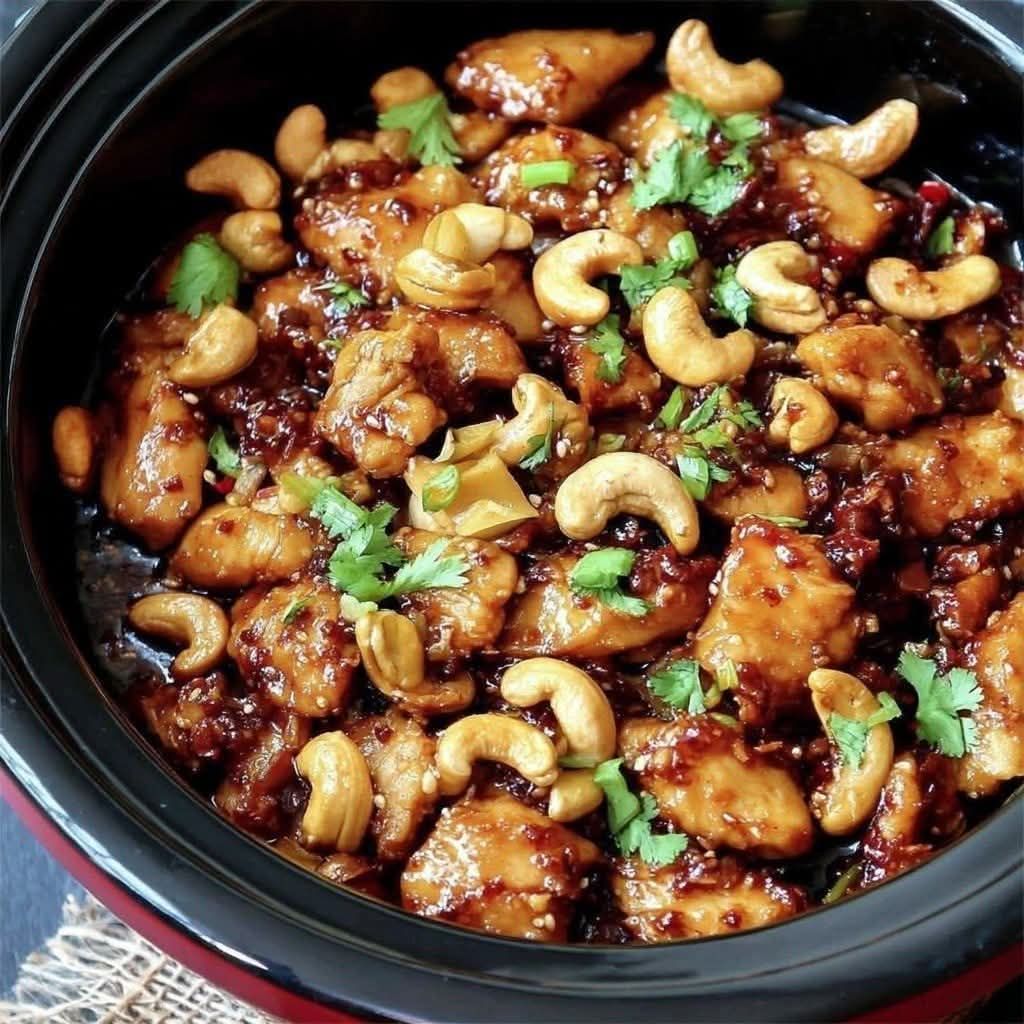
Slow Cooker Cashew Chicken
Cashew chicken sits at the top of most takeout orders for a very good reason: the combination of tender chicken, a savory-sweet soy and hoisin sauce, crisp vegetables, and buttery roasted cashews hits every note you want from a satisfying meal. The problem with ordering it regularly is cost, wait time, and the nagging awareness that restaurant versions are often heavier on sodium and oil than they need to be. This slow cooker version solves all of that. You get the same rich, deeply flavored result — juicy chicken saturated with sauce, crunchy cashews, colorful vegetables — with almost no active cooking time and full control over every ingredient that goes in.
The slow cooker is particularly well-suited to this dish. The long, gentle heat breaks down the chicken to a point of tenderness that’s difficult to achieve on a stovetop without overcooking the exterior, and the sauce concentrates and deepens over the hours in a way that makes it cling to every piece of chicken rather than sitting thin and watery in the pot. Come home to it after a full day and dinner is already done — just add the cashews and vegetables at the end, serve over rice, and you have a meal that genuinely competes with anything you’d order from a restaurant.
Why the Slow Cooker Works So Well Here
The biggest advantage of the slow cooker method for cashew chicken is what it does to the sauce. A sauce built from soy, hoisin, rice vinegar, garlic, and ginger tastes sharp and bright at the start of cooking. After 3 to 4 hours at a low, steady temperature, those sharp edges soften and the flavors meld into something more cohesive and rounded — the garlic becomes sweeter and more mellow, the hoisin deepens, the sweetness from the brown sugar or honey integrates fully rather than sitting on top. The chicken absorbs all of this as it cooks, resulting in pieces that are flavored all the way through rather than just coated on the surface.
The hands-off nature is the other major advantage. There’s no standing at the wok, managing high heat, timing multiple elements simultaneously. You make the sauce, add the chicken, set the cooker, and walk away. The most active part of the process is adding the vegetables and cashews in the final 30 minutes — which takes about two minutes to do.
Ingredient Notes
Chicken — Thighs are the preferred cut for slow cooker dishes. They have more fat and connective tissue than breasts, which means they stay moist and tender through long cooking rather than drying out. The fat also contributes richness to the sauce as it renders during cooking. Boneless, skinless thighs are the most convenient. Chicken breasts can be used for a leaner result, but they need careful attention to cooking time — breasts become dry and stringy if overcooked in the slow cooker, so check them at the lower end of the cooking window. Cut whichever you use into uniform bite-sized pieces, around 1 to 1.5 inches, for even cooking.
Cornstarch coating — Tossing the chicken pieces in a light coating of cornstarch before searing or adding them to the slow cooker is optional but worth doing. The cornstarch creates a very thin coating that helps the chicken hold its shape through the long cook, contributes to the sauce thickening around the chicken, and adds a slightly more substantial texture to each piece. If you sear the coated chicken in a hot skillet before adding it to the slow cooker, you also develop color and flavor through the Maillard reaction that the slow cooker alone cannot create.
Soy sauce is the backbone of the sauce — it provides saltiness and a deep umami quality that anchors everything else. Regular soy sauce produces a robust result; low-sodium soy sauce gives you more control and is recommended if you’re sensitive to salt. For a gluten-free version, tamari or coconut aminos substitute directly with minimal flavor difference.
Hoisin sauce adds sweetness, depth, and a slightly complex fermented quality that’s distinct from anything else. It’s an important component of what makes this taste specifically like cashew chicken rather than a generic Asian-style sauce. Most grocery stores carry it in the international foods aisle; it keeps well in the refrigerator for months after opening.
Rice vinegar provides the slight acidity that balances the richness of the soy and hoisin. It’s mild enough not to make the sauce taste sour, but its presence prevents the sauce from feeling flat or one-dimensional. Apple cider vinegar can substitute in a pinch, but rice vinegar is the cleaner, more appropriate choice.
Brown sugar or honey rounds out the sauce with sweetness and helps balance the saltiness of the soy. Brown sugar produces a slightly more molasses-forward, caramel-like sweetness; honey adds a floral note and thins the sauce slightly more. Either works — use whichever you have or prefer.
Garlic and ginger are non-negotiable aromatics in this sauce. Fresh garlic and freshly grated ginger both deliver a cleaner, more vibrant flavor than their powdered equivalents. The slow cooker mellows their sharpness over time, so start with a generous amount — the flavor will become rounder and more subtle rather than overpowering in the finished dish.
Roasted, unsalted cashews are added at the very end, just before serving. This is important. Cashews added early will absorb liquid, become soft, and lose the textural contrast that makes them so valuable in this dish. Adding them in the final few minutes preserves their crunch and nutty flavor. Roasted cashews have more developed, toasty flavor than raw — if you can only find raw cashews, toast them in a dry skillet for a few minutes first.
Vegetables — Bell peppers, broccoli, snap peas, and snow peas are all excellent choices. Add them in the final 30 minutes of cooking so they soften slightly but retain enough structure and color to be worth eating. If you add them at the start, they’ll be overcooked and grey by the time the chicken is done.
Ingredients
For the Chicken
1.5 lbs (680g) boneless, skinless chicken thighs (or breasts), cut into 1-inch pieces
3 tbsp cornstarch
1 tbsp neutral oil (for searing, optional)
For the Sauce
⅓ cup low-sodium soy sauce
3 tbsp hoisin sauce
2 tbsp rice vinegar
2 tbsp brown sugar or honey
3 cloves garlic, minced
1 tsp fresh ginger, grated
1 tbsp cornstarch mixed with 2 tbsp cold water (slurry, for thickening)
To Finish
1 cup roasted, unsalted cashews
1 red bell pepper, diced
1 cup broccoli florets (or snap peas, snow peas)
2 green onions, thinly sliced (for garnish)
1 tsp sesame seeds (for garnish)
For Serving
Steamed jasmine rice or cauliflower rice
Step-by-Step Instructions
Step 1 — Coat and Sear the Chicken (Optional but Recommended)
Toss the chicken pieces in the cornstarch until each piece is lightly coated. Heat the oil in a skillet over medium-high heat until shimmering. Working in batches to avoid crowding the pan, sear the chicken pieces for 2 to 3 minutes per side until lightly golden on the surface. Don’t cook them through — you’re only developing color and setting the cornstarch coating. Transfer the seared chicken to the slow cooker insert. If you’re skipping this step, add the cornstarch-coated chicken directly to the slow cooker without searing.
Step 2 — Make the Sauce
In a small bowl or measuring cup, whisk together the soy sauce, hoisin sauce, rice vinegar, brown sugar or honey, minced garlic, and grated ginger until fully combined. Taste the sauce before adding it to the slow cooker — this is the easiest point to adjust the balance. More soy sauce increases saltiness and depth; more hoisin adds sweetness and body; more rice vinegar adds brightness; more honey or brown sugar pushes the sweet-savory balance toward sweet. Adjust to suit your preference, then pour the sauce over the chicken in the slow cooker and stir to coat everything evenly.
Step 3 — Cook
Place the lid on the slow cooker. Cook on low for 3 to 4 hours, or on high for 1.5 to 2 hours. The chicken is done when it’s cooked through and tender — it should pull apart easily with a fork. Avoid overcooking, particularly if using chicken breasts, which can become dry and stringy past the point of doneness. Check at the lower end of the time range.
Step 4 — Thicken the Sauce and Add Vegetables
About 30 minutes before the end of the cooking time, stir the cornstarch slurry (1 tablespoon cornstarch mixed with 2 tablespoons cold water) into the slow cooker. This thickens the sauce from thin and brothy to glossy and coating. Add the diced bell pepper and broccoli florets at the same time. Replace the lid and cook for the remaining 30 minutes until the vegetables are just tender and the sauce has thickened around the chicken.
Step 5 — Add Cashews and Serve
Just before serving, stir in the roasted cashews. Taste the dish one more time and adjust seasoning if needed — a small splash more soy sauce, a pinch more sugar, or a drizzle of sesame oil can make a noticeable difference at this stage. Serve immediately over steamed jasmine rice or cauliflower rice, garnished with sliced green onions and a sprinkle of sesame seeds.
Tips for the Best Results
NEXT PAGE
ADVERTISEMENT
