
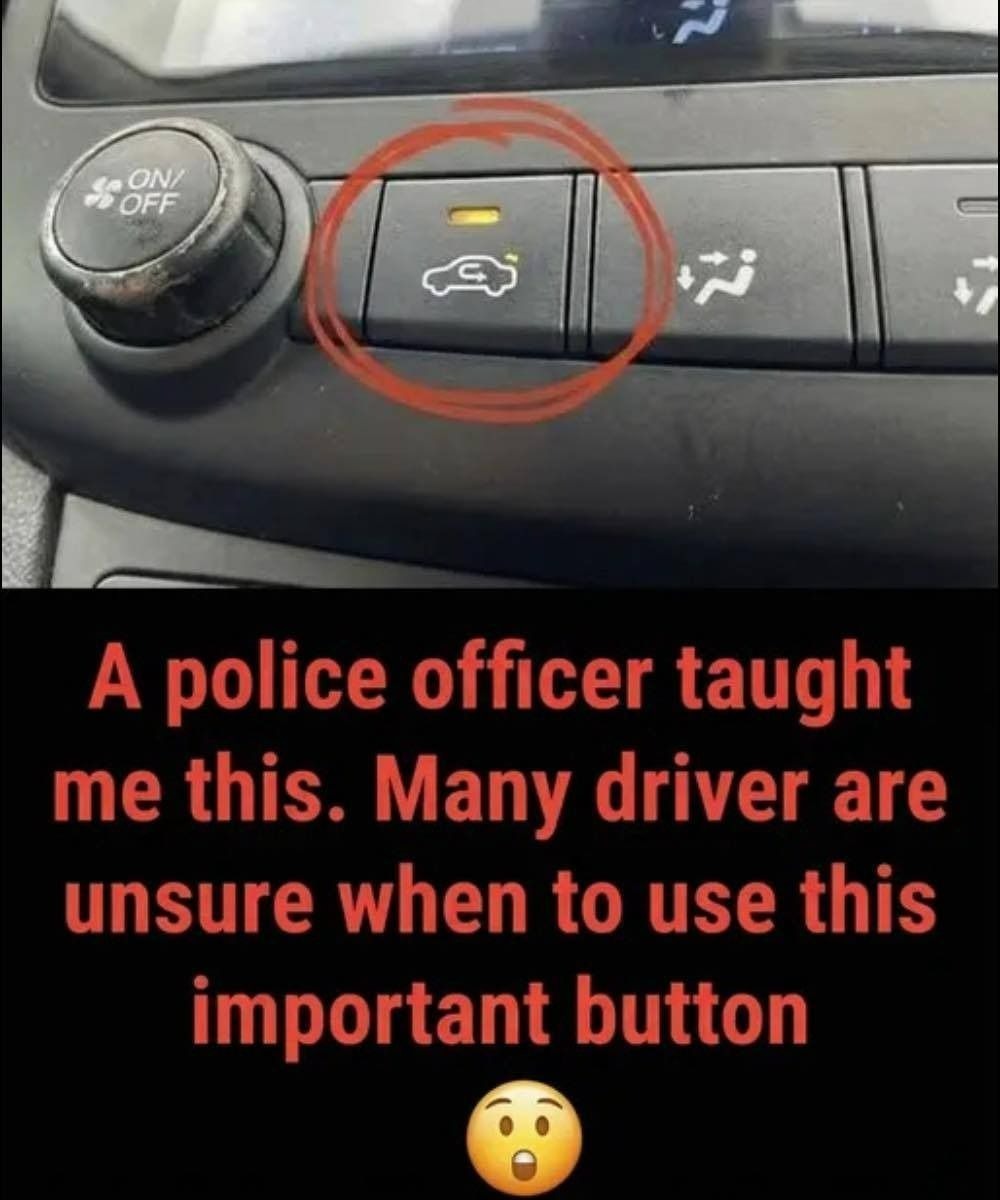
That little button on your car’s climate control panel—often marked with an icon of a curved arrow inside a car—is more than just a minor feature. The air recirculation button plays a crucial, often overlooked role in comfort, efficiency, and even health while driving. Yet many drivers rarely use it—or misuse it—missing out on its full potential.
Here’s what it really does, when to use it, and when to avoid it.
🔁 What Does the Air Recirculation Button Do?
When activated, the system closes the external air intake and recycles the air already inside the cabin. Instead of pulling in outside air (which may be hot, polluted, or smelly), your HVAC system re-cools or re-heats the same interior air.
Think of it as: Your car “holding its breath” and reusing the air inside.
When recirculation is off, the system pulls in fresh outside air, filters it, and then heats or cools it before circulating it inside the cabin.
✅ When to USE Air Recirculation
1. On Scorching Hot Days
This is the most common—and most effective—use of recirculation. Instead of constantly trying to cool down new blasts of 95°F outside air, the system recirculates the already-cooled air inside.
Pro tip: Start with windows down for 60 seconds to blast out the superheated air, then roll them up, turn on AC, and press the recirculation button. You’ll get cold air much faster.
2. In Heavy Traffic or Tunnels
When you’re stuck behind exhaust-spewing vehicles, recirculation closes off the outside air intake, preventing those toxic fumes from entering your cabin.
Use it: In bumper-to-bumper traffic, tunnels, or anywhere you smell exhaust.
3. When Driving Through Smelly Areas
Passing a farm, landfill, or area with strong odors? Recirculation mode seals off the outside, keeping those smells out of your cabin.
4. During High Pollen or Allergy Seasons
If you’re driving through an area with high pollen counts, recirculation can help keep allergens out—especially if you have a good cabin air filter.
5. On Dusty Roads
Driving on gravel or dirt roads? Recirculation keeps dust and particulates from being sucked inside.
❌ When to TURN OFF Air Recirculation
1. In Cold, Humid Weather (Crucial for Defogging)
This is the most important rule. When your windows start fogging up, recirculation mode is your enemy.
Why: The air inside your car is moist from your breath, wet clothes, or snow on your boots. Recirculation traps that moisture, making fog worse. To clear fog, you need dry air. Turning recirc OFF brings in colder outside air, which has lower absolute humidity. Your heater then warms and dries that air, wiping the fog from your windows.
The fix: Defogger + Fresh Air mode + AC (even with heat on) = clear windows.
2. For Long Drives to Prevent “Stale Air” Sleepiness
After 15-20 minutes on recirculation, the air can become stale as carbon dioxide from your exhaled breath builds up. This can cause drowsiness and reduced concentration.
What to do: If you’re on a long drive and feeling stuffy or tired, switch to fresh air for a few minutes to reintroduce oxygen.
3. When Carrying Several Passengers
More people = more moisture and CO₂. Use recirc sparingly in a full car, or be diligent about switching to fresh air periodically.
4. When the AC Is Running Efficiently
Once your car is comfortably cool, you can switch to fresh air mode to bring in oxygen while maintaining temperature. The AC will work a little harder, but you’ll have fresher air.
NEXT PAGE
ADVERTISEMENT
