
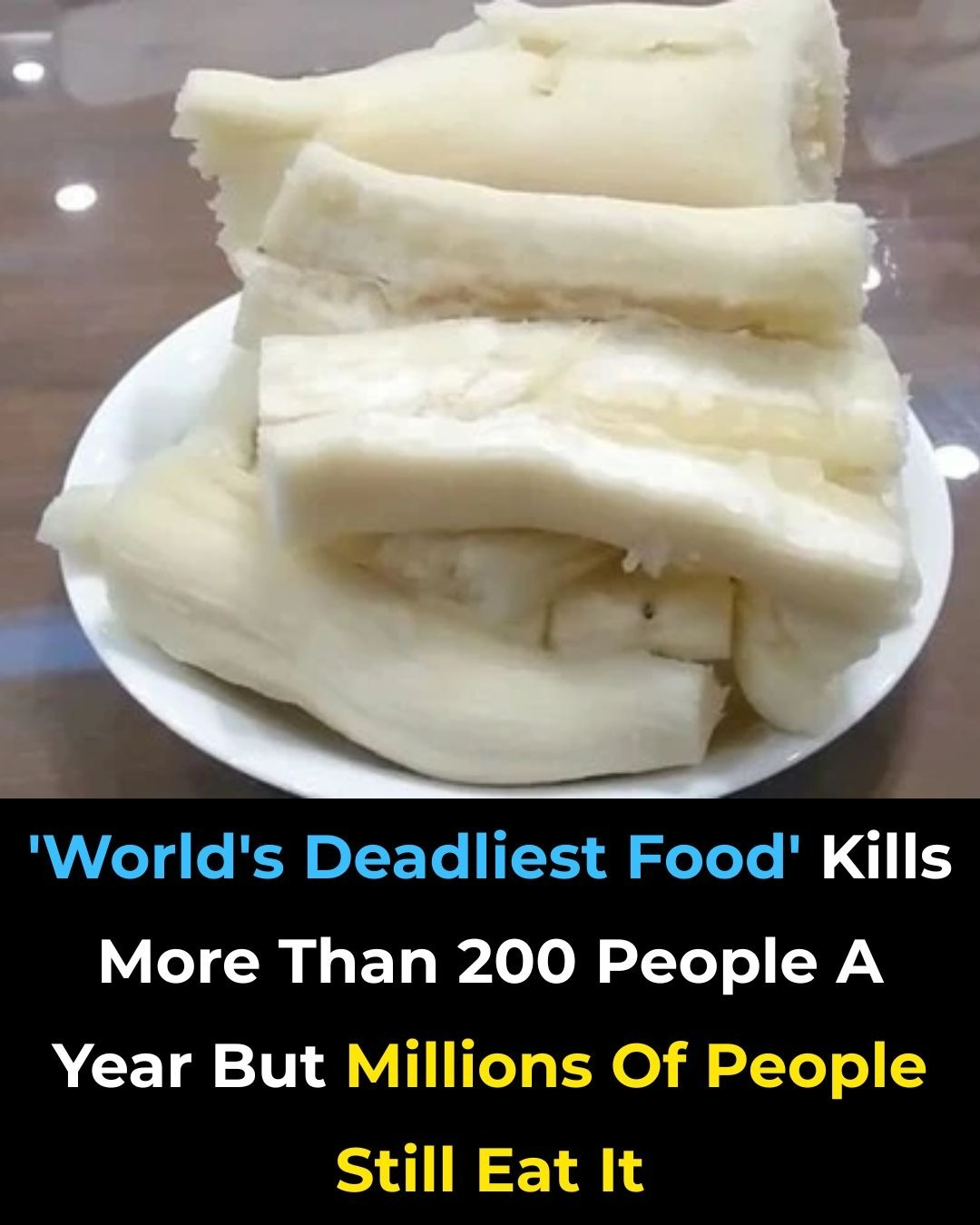
Every year, over 200 people die from consuming what is known as the “world’s deadliest food,” yet nearly 500 million people still eat it.
There are many foods that could fill you up quickly, but you wouldn’t find them on your dinner plate every night. So, what is the food that’s both deadly and widely consumed around the globe?
Cassava.
A plant and a staple food for many, cassava plays an important role in the diets of millions of people worldwide. Each year, it is consumed by over 500 million people, and hundreds of millions of tons are grown across Africa, Latin America, and Asia.
Originating in South America, cassava is both a lifeline and a latent threat. The plant’s stems, peel, and leaves contain compounds that can produce hydrogen cyanide—making it potentially fatal if consumed improperly.
What Makes Cassava Dangerous?
Cassava contains naturally occurring compounds called cyanogenic glycosides. When the plant is damaged—through chewing, grating, crushing, or slicing—these compounds come into contact with an enzyme that triggers a chemical reaction, releasing hydrogen cyanide.
Yes, the same poison famous in spy novels.
The danger depends on:
The variety of cassava (sweet vs. bitter)
How it’s prepared
How much is eaten
Bitter cassava contains significantly higher levels of cyanogenic compounds than sweet cassava. It’s hardier and more drought-resistant, making it a critical food source in poor soil regions—but it also requires much more careful processing.
Why Do People Still Eat It?
Because cassava is a lifesaving crop. It:
Grows in poor soil where other crops fail
Withstands drought better than most staples
Provides calories for hundreds of millions of people
Is affordable and widely available
For communities across Africa, Asia, and Latin America, cassava isn’t a choice—it’s a necessity.
How Is Cassava Made Safe?
Traditional processing methods have been developed over centuries to remove the toxins:
Method How It Works
Peeling The highest concentrations are in the peel and the layer just beneath it
Soaking Submerging in water for 2-3 days leaches out cyanogenic compounds
Fermentation Breaking down the compounds through microbial action (used for fufu, gari)
Boiling Cooking in an open pot allows hydrogen cyanide gas to escape (never cover the pot tightly)
Drying Sun-drying or roasting breaks down the compounds
Grating and pressing Squeezing out the toxic liquid (used for cassava flour)
One crucial rule: Never eat cassava raw. Never eat bitter cassava without thorough processing.
NEXT PAGE
ADVERTISEMENT
